


What is the use of amino acid fertilizer?
 May 09, 2026|
 View:619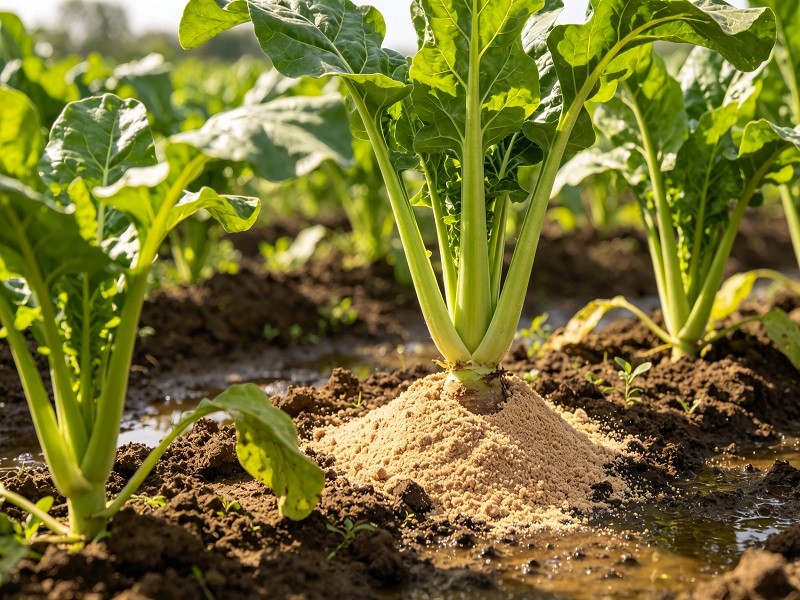
Amino acids are essential for plant health and productivity
In the quest for higher yields, better quality, and more resilient crops, modern agriculture is increasingly turning to solutions that work with plant biology, not just feed it. Among these, amino acid fertilizer has emerged as a cornerstone of efficient and sustainable farming. But what exactly is its use, and why is it becoming indispensable for growers worldwide? This guide delves deep into the multifaceted roles of amino acid fertilizers, explaining not just what they do, but how and why they deliver such remarkable benefits for plant health and productivity.
Key Takeaways
Beyond Nutrition: Amino acid fertilizers act as powerful biostimulants, enhancing plant metabolism, stress tolerance, and nutrient uptake, going far beyond the role of a simple nutrient supplier.
Energy Efficiency: By providing ready-to-use amino acids, they save plants significant energy otherwise spent on synthesis, redirecting resources towards growth, flowering, and fruiting.
Multifaceted Benefits: Key uses include promoting robust root development, improving photosynthesis, enhancing flowering and fruit set, accelerating recovery from stress, and boosting overall crop quality and yield.
Synergistic Partner: They are not a replacement for traditional NPK fertilizers but a vital complement that significantly improves the efficiency and effectiveness of a complete nutrition program.
Versatile Application: Effective through foliar spray, fertigation, or soil drench, amino acid fertilizers offer flexibility to address plant needs at critical growth stages or during stress events.
What is an Amino Acid Fertilizer?
At its core, an amino acid fertilizer is a plant nutrition input derived from protein hydrolysates—proteins broken down into their smaller building blocks: peptides and free amino acids. These raw materials can be plant-based (like soy or cereal proteins) or animal-derived, processed through methods like enzymatic hydrolysis to preserve the bioactive L-form amino acids that plants can directly utilize.
Unlike conventional fertilizers that provide elemental nutrients, amino acid fertilizers deliver organic nitrogen and carbon in a form that is immediately recognizable and usable by plant cells. Think of it as providing a pre-assembled toolkit versus delivering raw materials that require extensive on-site construction.
The Core Mechanisms: How Amino Acid Fertilizers Work
The profound usefulness of amino acid fertilizer stems from its direct interaction with fundamental plant physiology. Here’s a breakdown of its core mechanisms of action:
1. Direct Absorption and Metabolic Integration
Plants possess specific transporter proteins in their roots and leaves for absorbing amino acids. When applied, these organic molecules bypass the energy-intensive process where plants must convert inorganic nitrogen (like nitrate) into amino acids. This direct pathway saves substantial metabolic energy, allowing the plant to allocate more resources to vital processes like cell division, protein synthesis, and fruit development.
2. Natural Chelation and Nutrient Mobility
Amino acids are excellent natural chelating agents. Their molecular structure allows them to bind with cationic micronutrients like iron, zinc, manganese, and copper, forming stable, water-soluble complexes. This prevents these crucial trace elements from becoming locked in the soil and enhances their uptake and transport within the plant, dramatically improving Nutrient Use Efficiency (NUE).
3. Precursors to Plant Hormones and Enzymes
Specific amino acids serve as direct building blocks for plant hormones. For example, L-tryptophan is a precursor to auxins (regulating root growth), and L-methionine leads to ethylene formation. By supplying these precursors, amino acid fertilizer naturally supports and optimizes the plant's own hormonal balance, leading to better root architecture, shoot growth, and flowering.
4. Enhanced Stress Tolerance and Recovery
Amino acids like proline and glycine-betaine play critical roles as osmoprotectants. They help regulate cellular water balance, protecting plant tissues from dehydration under drought, heat, or salinity stress. This makes amino acid fertilizer a powerful tool for mitigating abiotic stress and speeding up recovery after damaging events like transplant shock or frost.
Primary Uses and Agronomic Benefits of Amino Acid Fertilizer
The mechanisms above translate into a wide array of tangible benefits for crops. The primary uses of amino acid fertilizer can be categorized as follows:
1. Promoting Vigorous Growth and Development
Root Stimulation: By influencing auxin synthesis, amino acids promote root elongation, branching, and the development of fine root hairs. This creates a more extensive root system for superior water and nutrient exploration.
Enhanced Photosynthesis: Amino acids such as glycine and glutamic acid are involved in chlorophyll synthesis. Their application results in darker green, healthier foliage with improved photosynthetic capacity, driving greater biomass production.
2. Improving Crop Quality and Yield
Better Flowering and Fruit Set: Improved energy allocation and hormone balance lead to more uniform flowering, reduced flower drop, and better early fruit development.
Superior Fruit Quality: Growers consistently report improvements in fruit size, uniformity, color intensity, and sugar content (Brix levels) when using amino acid fertilizers.
3. Boosting Nutrient Uptake and Fertilizer Efficiency
This is one of its most valuable uses. Amino acid fertilizer enhances the plant's ability to absorb and utilize nutrients from both the soil and applied fertilizers.
Chelation of Micronutrients: As described, it makes Fe, Zn, Mn, and Cu more bioavailable.
Improved Macronutrient Use: It can improve the assimilation of nitrogen, phosphorus, and potassium, making traditional NPK programs more effective and reducing waste.
4. Strengthening Stress Resistance
Applying amino acid fertilizer before, during, or after stressful conditions helps plants cope and recover faster. It is commonly used proactively during:
Drought or heatwaves
Transplanting
Salinity stress
Pest or disease pressure
Herbicide or pesticide application (to alleviate potential phytotoxicity)
Amino Acid Fertilizer vs. Traditional NPK: A Complementary Alliance
A common question is whether amino acid fertilizer can replace NPK. The answer is no; they are synergistic partners. The table below highlights the key differences and complementary roles:
| Feature | Traditional NPK Fertilizer | Amino Acid Fertilizer |
|---|---|---|
| Primary Role | Supplies primary macronutrients (N, P, K) in inorganic forms. | Acts as a biostimulant and organic nitrogen source; enhances plant physiology and nutrient use. |
| Mode of Action | Provides elemental nutrition that plants must convert. | Provides readily usable organic molecules that are directly integrated into metabolism. |
| Effect on Soil | Can contribute to salinization and may suppress microbial life with overuse. | Feeds beneficial soil microbes, improves soil structure, and promotes long-term soil health. |
| Stress Mitigation | Limited direct role. | Directly enhances plant tolerance to abiotic stresses (drought, heat, salinity). |
| Best Use Case | Foundational nutrition to meet macro-nutrient demands. | Enhancing plant performance, efficiency, quality, and resilience within a balanced nutrition program. |
The Verdict: Use NPK to feed the plant's basic needs, and use amino acid fertilizer to optimize the plant's health, efficiency, and ability to use that feed effectively.
Practical Application: How to Use Amino Acid Fertilizer
The versatility of amino acid fertilizer allows for several application methods, each suited to different goals:
| Method | Description | Best For |
|---|---|---|
| Foliar Spray | Diluted solution sprayed directly onto leaves. | Quick correction of deficiencies, rapid stress response, and application during key growth stages (e.g., pre-flowering, fruit set). Offers the fastest absorption. |
| Fertigation / Drip Irrigation | Incorporated into irrigation systems. | Uniform application over large areas, consistent root zone stimulation, and improving soil microbial activity. |
| Soil Drench / Root Irrigation | Applied directly to the soil around the root zone. | Promoting root development, revitalizing poor soils, and as a base treatment. |
| Seed Treatment | Seeds are soaked or coated in a diluted solution. | Improving germination rates, ensuring uniform seedling emergence, and giving young plants a vigor boost. |
General Guidance: Always follow the specific product label instructions. Typical foliar application rates range from 1-3 g/L, applied during cooler parts of the day (early morning or late afternoon) for best absorption. For stress recovery, applications can be made every 7-14 days; for general health maintenance, every 2-4 weeks during the growing season is common.
Choosing a Quality Product: The GreenTop Advantage
The efficacy of an amino acid fertilizer hinges on its quality—the source of raw materials, the production process, and the profile of amino acids it contains. Inferior products with low levels of bioactive L-amino acids or high salt content can be ineffective.
This is where partnering with an experienced manufacturer like GreenTop makes a critical difference. With over 15 years of specialization in organic fertilizer formulations, GreenTop leverages advanced bio-fermentation and hydrolysis technologies to produce premium amino acid fertilizers.
GreenTop's commitment to quality ensures:
High Bioavailability: Products are rich in active, plant-available L-amino acids like glutamic acid, aspartic acid, and lysine.
Consistent Formulations: Tailored for different crop needs and growth stages.
Trusted Certifications: Adherence to stringent quality standards, providing reliability for growers.
Proven Results: From enhancing vegetable growth to improving fruit tree vitality, GreenTop's solutions are designed to deliver tangible improvements in crop performance and stress resilience.
By choosing a trusted source like GreenTop, you ensure you are applying a potent, reliable tool that truly unlocks the benefits of amino acid technology for your crops.
Frequently Asked Questions (FAQ)
Q1: Can amino acid fertilizer replace my regular NPK fertilizer?
No, it is a supplement and enhancer, not a replacement. Amino acid fertilizers work best within an integrated program, improving the plant's ability to absorb and utilize nutrients from NPK fertilizers and the soil, thereby increasing their efficiency.
Q2: Is amino acid fertilizer suitable for organic farming?
Yes, high-quality amino acid fertilizers derived from natural plant or animal proteins through approved processes like enzymatic hydrolysis are generally accepted under many organic certification programs (e.g., OMRI). Always verify with your specific certifying body.
Q3: How quickly will I see results after application?
Effects can be visible surprisingly fast, especially with foliar sprays. Improvements in leaf color (greening) and plant vigor are often noticeable within a few days to a week after application, as the amino acids are directly absorbed and utilized.
Q4: How often should I apply amino acid fertilizer?
Frequency depends on the goal. For general plant health and stress prevention, foliar sprays every 2-4 weeks are common. During periods of active growth, flowering, or immediately after a stress event (e.g., transplant, hail), more frequent applications (every 1-2 weeks) may be beneficial.
Q5: Is it safe to mix amino acid fertilizer with other agrochemicals?
Amino acid fertilizers are generally compatible with most fertilizers, micronutrients, and crop protection products. However, it is always recommended to perform a small jar test before large-scale tank mixing to check for incompatibility.
Q6: On which crops is amino acid fertilizer most effective?
It shows excellent results across a wide spectrum. High-value crops like vegetables, fruits (citrus, berries, vineyards), greenhouse crops, and ornamentals often show very pronounced benefits, particularly in terms of quality enhancement and stress management.