


What Is Amino Acid Fertilizer?
 Apr 28, 2026|
 View:1984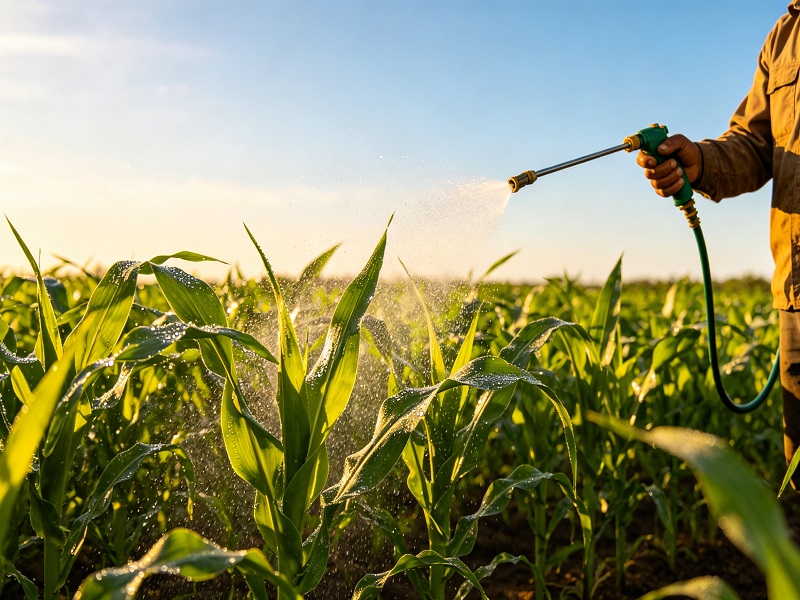
As modern agriculture shifts toward sustainable and efficient solutions, many growers are asking: what is amino acid fertilizer and how can it benefit their crops? The short answer: it’s an organic fertilizer that provides essential building blocks for plant growth—amino acids—in a form plants can absorb instantly. Unlike synthetic fertilizers that simply dump nutrients onto plants, amino acid fertilizer works with the plant’s natural biology to deliver nutrients more intelligently, improve stress resistance, and enhance crop quality.
This comprehensive guide will answer what is amino acid fertilizer in detail, explain how it works, and help you understand why it’s becoming an essential tool for modern farming.
Key Takeaways
Amino acid fertilizer is a fertilizer made primarily from amino acids, either from plant sources (soybeans, corn) or animal sources (fish, hair, blood), often combined with organic or inorganic nutrients.
More than just a nitrogen source, amino acid fertilizer acts as a plant biostimulant, actively regulating growth and strengthening plants against environmental stress.
Amino acids help plants absorb more nutrients from the soil, meaning you can use less fertilizer while getting equal or better results.
The specific effects of amino acid fertilizer depend on the composition of individual amino acids, not whether they are plant-derived or animal-derived.
Scientific studies demonstrate that amino acid fertilizer can boost crop yields by 15-30% while significantly reducing nitrogen loss to the environment.
Chapter 1: What Is Amino Acid Fertilizer? – A Clear Definition
At its most fundamental level, what is amino acid fertilizer comes down to this: it is a fertilizer that contains amino acids as its primary active ingredient, supplemented with organic or inorganic nutrients. But to understand its power, you first need to understand amino acids themselves.
1.1 The Science Simplified: What Are Amino Acids?
Amino acids are often called the “building blocks of life”—and for good reason. Every living organism, from the smallest bacterium to the largest tree, uses amino acids to build proteins. Proteins, in turn, are responsible for nearly every function within a plant’s body: from forming new leaves and roots to producing flowers, fruits, and seeds. Amino acid fertilizer takes these natural compounds and delivers them directly to plants, bypassing the slow, inefficient process of soil conversion.
1.2 What Is Amino Acid Fertilizer Made Of?
Amino acid fertilizers come from two primary sources:
Plant-derived sources: Soybeans, soybean meal, corn bran, peanut bran, monosodium glutamate byproducts, and wood processing scraps.
Animal-derived sources: Animal hair, feathers, blood, offal, low-fat fish meal, silkworm pupae, and slaughterhouse waste.
Both types can be highly effective when properly processed. The key distinction lies not in the source but in the specific amino acid profile each provides. Amino acid fertilizers can also take different forms: liquid fertilizers, solid powders, foliar sprays, or water-soluble granules, and can be further classified as organic fertilizers, mineral fertilizers, or compound fertilizers depending on their secondary ingredients.
1.3 What Is Amino Acid Fertilizer Supposed to Do?
Unlike traditional fertilizers that simply supply raw nutrients, amino acid fertilizer plays a dual role. It provides organic nitrogen in a plant-ready form while also acting as a biostimulant—substances that enhance plant metabolism, strengthen natural defenses, and improve overall crop performance.
Chapter 2: What Is Amino Acid Fertilizer’s Core Mechanism? How It Works at the Plant Level
Understanding how amino acid fertilizer works at the microscopic level helps explain why it delivers such impressive results in the field.
2.1 Direct Root Uptake: No Waiting, No Wasting
Plants absorb inorganic nitrogen (the form found in synthetic fertilizers) through their roots, but this process is slow and highly inefficient—much of it is lost to runoff or gas emissions before plants can use it. Amino acid fertilizer changes this dynamic entirely. Research proves that plants can absorb intact amino acid molecules directly through their roots, bypassing the need for soil microorganisms to break down organic matter first. This direct pathway means nutrients become available almost immediately after application. Plant roots, leaves, and stems can take up amino acids through passive or osmotic absorption, leading to noticeable effects within a short time after application.
2.2 From Roots to Every Leaf
Once inside the plant, amino acids don’t just sit there—they get to work immediately. The plant transports them through the xylem (the plant’s water-conducting tissue) to areas where new growth is happening or where proteins are needed. Specialized transporter proteins within the plant actively move amino acids to wherever they are needed most, ensuring that nutrition is distributed efficiently across the entire plant.
2.3 Nitrogen That Stays Where It Belongs
Amino acid fertilizer offers a more intelligent nitrogen delivery system. When nitrogen is bound within an organic molecule, it resists being washed away by rain or irrigation, releases gradually as plants metabolize the amino acids, and is less prone to turning into nitrous oxide gas. The result is less waste, lower costs, and healthier crops.
Chapter 3: What Is Amino Acid Fertilizer’s Role in Plant Growth – Key Benefits
What is amino acid fertilizer capable of achieving in your fields or gardens? Scientific research and real-world trials point to four major benefit categories.
3.1 Enhanced Photosynthesis: More Energy, Better Growth
Amino acids directly influence how efficiently plants convert sunlight into chemical energy. Glycine, for instance, increases chlorophyll content in plant leaves, enabling crops to absorb more carbon dioxide and produce more photosynthetic energy. Multiple amino acids work together synergistically, producing effects greater than the sum of their parts. This results in faster growth, stronger stems, darker green leaves, and more abundant flowers and fruits.
3.2 Deeper Roots and Stronger Absorption
Amino acid fertilizer is often called “root fertilizer” because of its powerful effect on root system development, stimulating the division and growth of meristem cells at root tips, which produces faster rooting of seedlings, increased secondary roots, and longer, more robust root systems. Stronger roots mean plants can access water and nutrients from deeper in the soil, making them more resilient to dry spells and nutrient-poor conditions.
3.3 Improved Crop Quality: Better Taste, Color, and Shelf Life
The quality benefits extend well beyond yield, significantly improving fruit size, color, sugar content, edible portion, and storability. Vegetables taste purer and fresher with reduced coarse fiber; flowers bloom longer with more vibrant colors and fragrance; the overall increase in marketable produce means less waste and higher profits.
3.4 Stronger Against Stress: Heat, Cold, Drought, and Disease
One of the most valuable functions of amino acid fertilizer is its ability to help plants withstand environmental stress. Crops treated with amino acids produce thicker stems, expanded leaf areas, and faster dry matter accumulation, making them more resistant to drought, cold, heat, pests, diseases, and lodging. Application of many amino acids has been shown to increase crop yields while reducing the effects of stresses, improving growth even in less desirable environmental conditions such as saline soils or heat and drought stress.
Chapter 4: How to Use Amino Acid Fertilizer – Practical Application Guide
Understanding what is amino acid fertilizer theoretically is valuable, but knowing how to apply it practically is what delivers results.
4.1 Soil Application (Base Fertilizer)
Apply granular or powdered amino acid fertilizer by mixing it into the soil before planting or during early growth stages. For best results, incorporate it into the root zone where feeder roots can access it most easily.
4.2 Foliar Spraying (Leaf Application)
Dilute amino acid fertilizer with water at recommended ratios (typically 1:800–1:1000) and spray evenly onto plant leaves until droplets begin to drip. Studies show that amino acids applied as foliar sprays can enhance photosynthesis and protect against oxidative stress by increasing antioxidant synthesis. Apply during the vegetative growth phase and extend into flowering until approximately two weeks before harvest, using early morning or late afternoon application to prevent leaf burn and maximize absorption.
4.3 Drip Irrigation and Fertigation
Liquid amino acid fertilizer integrates seamlessly into drip irrigation systems. This method delivers nutrients directly to the root zone with minimal waste, making it ideal for high-value crops in greenhouse or hydroponic settings.
4.4 Seed Treatment
Soaking seeds in a diluted amino acid fertilizer solution before planting can dramatically improve germination rates. This simple step gives seedlings a powerful head start, resulting in more uniform emergence and stronger early growth.
4.5 Recommended Application Rates
| Application Method | Rates | Frequency |
|---|---|---|
| Foliar Spray | Dilute at 1:800~1000, apply 300-450L per hectare | Vegetative & flowering stages |
| Soil Drench | 0.2-0.5% dilution | Early season & active growth |
| Drip Irrigation | 200-250 mL per 1000 m² | Weekly or bi-weekly |
Chapter 5: Amino Acid Fertilizer vs. Synthetic Fertilizer – A Detailed Comparison
Many growers ask: what is amino acid fertilizer doing that conventional synthetic fertilizers cannot? The differences are substantial and matter for both crop performance and environmental sustainability.
5.1 Nutrient Efficiency: Less Waste, More Results
Synthetic nitrogen fertilizers are notoriously inefficient. Studies show that a large percentage of applied synthetic nitrogen is lost to the environment before crops can use it—wasting money and polluting waterways. Amino acid fertilizer dramatically improves this picture. For example, integrating amino acids with urea raised rice nitrogen-use efficiency by up to 34%, meaning significantly less fertilizer is needed to achieve the same or even greater yields. Measuring nutrient-use efficiency is key to better evaluating the practical value of what is amino acid fertilizer bringing to farm economics.
5.2 Safety Profile: No Salt Burn, No Crop Damage
Synthetic fertilizers are essentially mineral salts. Used incorrectly, they can burn plant roots, damage leaves, and even kill young seedlings. Amino acid fertilizer contains very low amounts of salts, so injury will not be an issue—plants can be fed safely without the constant fear of over-application damage.
5.3 Environmental Impact: Sustainable by Design
This is where the difference becomes most stark. Synthetic nitrogen production is energy-intensive and contributes significantly to greenhouse gas emissions. Amino acid fertilizer acts as a slow-release nitrogen source, reducing runoff and leaching. Unlike quick-release synthetic nitrogen, which often pollutes waterways, amino acids provide a steady nutrient supply while minimizing losses.
5.4 Beyond Nutrition: The Biostimulant Advantage
The most important distinction is perhaps this: synthetic fertilizers are just nutrients. Amino acid fertilizer is both a nutrient source and a biostimulant. Amino acids themselves are biostimulants that enhance plant physiological processes, promoting root development, improving nutrient uptake, boosting photosynthetic activity, and enhancing plant resilience against stress—none of which synthetic fertilizers can do. Compared to synthetic fertilizers that primarily serve as a nutrient source, amino acid fertilizer offers a multi-faceted approach to plant nutrition and growth enhancement.
Chapter 6: Frequently Asked Questions (FAQ)
A: Amino acid fertilizer is excellent for boosting root development, enhancing stress tolerance (drought, cold, salinity), improving fruit quality and shelf life, increasing nutrient efficiency, and supporting organic farming systems. It can be applied to all crops including vegetables, fruits, grains, flowers, and turf.
A: Most amino acid fertilizer products contain primarily organic nitrogen (typically 10-16% total N) with very low phosphorus and potassium. It is designed to complement—not replace—regular NPK fertilizers, working synergistically to improve their effectiveness.
A: Amino acid fertilizer is widely approved for organic systems. Many high-quality amino acid products are OMRI-listed and comply with USDA National Organic Program requirements, making them ideal for certified organic operations (always verify specific product certifications before use).
A: For best results, apply amino acid fertilizer every 1-3 weeks during active growth periods. Frequent applications at lower rates are generally more effective than fewer heavy applications.
A: Dry solid forms typically last 2-3 years when stored in cool, dry conditions away from direct sunlight. Liquid forms generally have a shorter shelf life (12-24 months) and should be protected from freezing.
A: While both are organic soil amendments, amino acid fertilizer provides directly absorbable nitrogen and acts as a biostimulant for immediate plant metabolism, whereas humic acid primarily improves soil structure and nutrient availability over the long term.
A: Yes, amino acid fertilizer is generally compatible with most fertilizers and pesticides. However, avoid mixing with strongly alkaline or acidic products—perform a small jar test before large-scale mixing.
Conclusion: Understanding What Is Amino Acid Fertilizer and Why It Matters
So, what is amino acid fertilizer in practical terms? It is one of the most powerful tools available for modern, sustainable agriculture. By providing organic nitrogen in a plant-ready form while simultaneously acting as a biostimulant, it delivers benefits that synthetic fertilizers simply cannot match: stronger roots, better stress resistance, higher yields, improved crop quality, and a reduced environmental footprint.
As global agriculture confronts the dual challenges of feeding a growing population while protecting the planet, solutions like amino acid fertilizer will only become more valuable.
For growers and agricultural businesses seeking a reliable partner in this journey, GreenTop stands ready to help. With over 15 years of experience in humic acid and organic fertilizer production, GreenTop provides premium amino acid fertilizer products derived from high-quality raw materials, backed by rigorous quality control and third-party certifications. Whether you need liquid formulations, powdered concentrates, or custom blends for specific crop requirements, GreenTop’s technical team works alongside you to optimize application strategies and maximize your return on investment.
To learn more about what amino acid fertilizer can do for your farming operation, or to request product samples and technical consultation, visit GreenTop’s official website or contact their agricultural specialists directly. The future of farming is organic, efficient, and sustainable—and amino acid fertilizer, delivered by trusted partners like GreenTop, is leading the way.