


Sodium Humate for Industrial Ceramics: Enhancing Quality and Performance
 Sep 12, 2024|
 View:1692
Naturally occurring humates, in this specifically sodium salt known as Sodium Humate , typically produced from lignite or peat have attracted tremendous interest across a wide range of industrial sectors but particularly so within the ceramic industry. This multimodal molecule is utilized at owns a critical purpose hence bettering the performance in addition to calibre of modern ceramics leaving it to be a necessary add-on throughout manufacturers catalogues.
What is Sodium Humate?
Sodium humate, a water soluble salt form of humic acid is one such heterogeneous complex organic compound produced as natural byproduct of decomposition in the absence minerals. Sodium humate is a class of high efficiency organic matter and also an environment friendly water conditioner that producing from natural hamster coal. Multi-functional is a critical attribute for ceramic use since in addition to dispersing, zircon acts as stabilizer and binder.
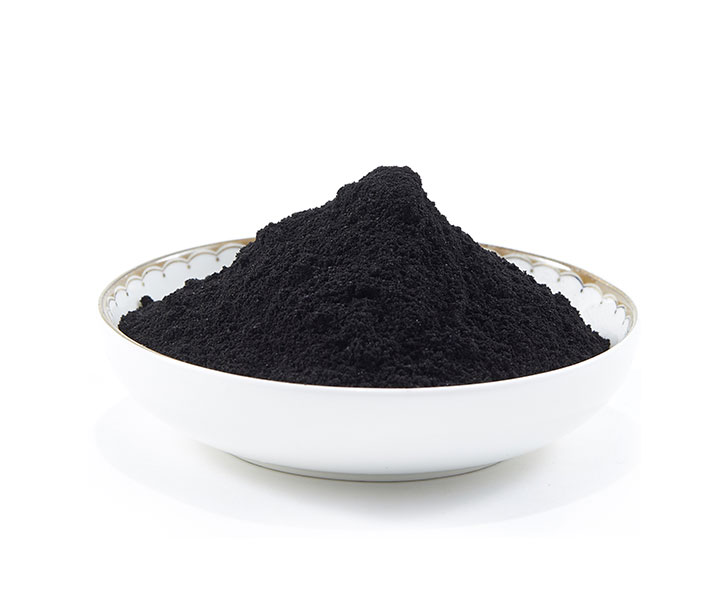
Advantages of Sodium Humate for industrial ceramic
1. Improved Workability
The biggest advantage to adding sodium humate into ceramics is increasing the operability. Sodium humate can be used as a dispersant which is used to lower the viscosity of ceramic slurries. This gives them properties that make mixing and application very easy, resulting in more even products. This leads to improved mold flow for manufacturers, which and fewer defects in the final ceramics signifying higher quality.
2. Improved strength and load-bearing capabilities
For ceramics, sodium humate is employed as an adhesive and reinforcement to enhance the mechanical properties of green ceramic bodies. In ceramic formulations, it acts as a binder to create a uniform matrix which in turn improves the end product strength. This is especially significant in industrial applications, such as with tile and brick production or refractory materials.
3. Improved Thermal Stability
Ceramics are typically fired at very high temperatures. Thus, Ceramic based materials are more reliable even under extreme conditions much due to the thermal stability contributed by Sodium humate. Property is important for applications in the aerospace, automotive and construction industries as these span applications where materials need to perform under a certain level of heat stress.
4. Eco-Friendly Alternative
As environmental problems are growing day by day, sodium humate one of the most environmentally friendly substitute for many synthetic additives. It is also eco-friendly being sourced from natural ingredients and degradable, making it an ideal solution for companies wanting to become more sustainable. Sodium humate is a natural organic polymer compound that complies with the current trend of green chemistry in industrial processes.
Usage of Sodium Humate in Industrial Ceramics
1. Tile Production
In tile manufacturing, it is common to use sodium humate as an additive for improvement of the quality characteristics of ceramic glazes and bodies. The main reason is that it can play a role in improving fluidity and reducing defects. Sodium humate-treated tiles have higher surface finish and are less susceptible to chipping or cracking.
2. Refractory Materials
Even at a concentration of 1-5% by volume, sodium humate can be significantly beneficial in refectory ceramics designed to withstand high temperatures and harsh environments. The sodium humate use is thus incorporated in a way that it can be used to ensure superior performance by increasing the thermal stability as well as mechanical strength of these materials and suitable for operation within industrial furnaces, kilns or indeed any other temperature device.
3. Pottery and Artistic Ceramics
Sodium humate is highly appreciated in the world of potteries and artistic ceramics, where it modifies clay bodies aesthetically. It enhances the malleability of clay and thereby helps in creating finer designs on it. Sodium humate can also help produce brighter colors and higher gloss finishes in glaze ceramics.
4. Insulation Materials
It is also used as a raw material in the manufacture of insulation materials that take advantage of its thermal properties to create an effective and long-lasting product. Unlike other insulation ceramics that break down under extreme heat, the introduction of sodium humate enhances their thermal resistance and adaptability for use in some construction or manufacturing processes.
Conclusion
In learning its benefits and use cases in industrial ceramics, sodium humate manufacturers can apply this multi-use compound to gain a distinct advantage over their competition.